Meta Description: Discover the critical differences between industrial and domestic heat sink. Learn how EightBond’s advanced thermal solutions master extreme demands for reliability and performance. Explore materials, design, and engineering depth.
Introduction: The Universal Law of Cooling
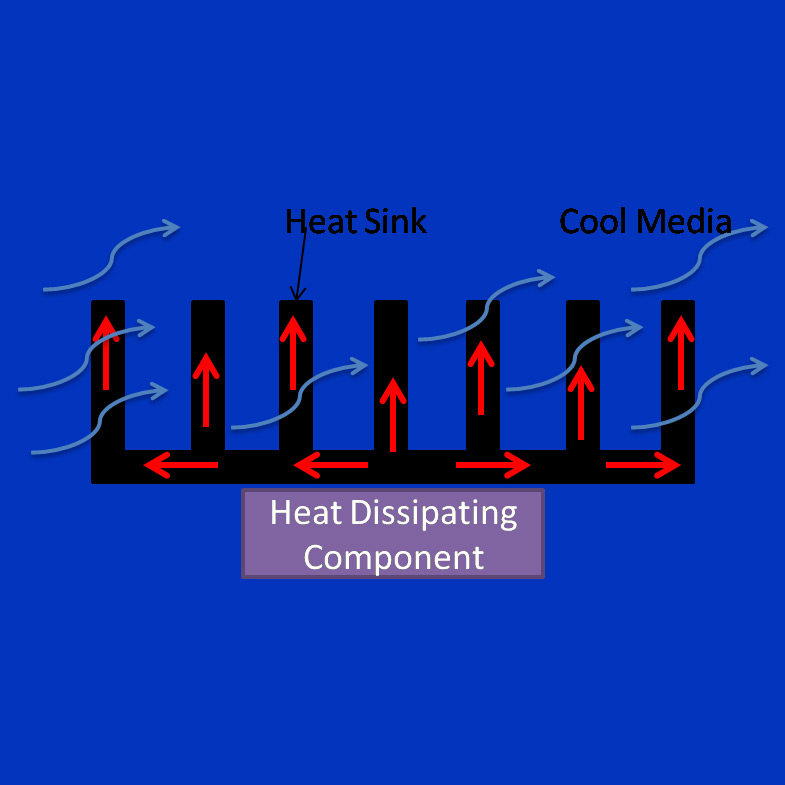
Heat is the inevitable byproduct of energy consumption. From the smartphone in your hand to the industrial inverter controlling a factory robot, managing thermal output is paramount to performance, efficiency, and longevity. At the heart of many thermal management systems lies the heat sink – a passive component tasked with dissipating unwanted heat.
At first glance, a heat sink in a gaming PC and one in a wind turbine’s converter might look similar: often a piece of metal with fins. However, the principles governing their design, operation, and selection diverge dramatically. Understanding these differences is crucial for engineers, procurement specialists, and anyone involved in selecting the right component for the application.
This article delves deep into the fundamental distinctions between industrial and domestic heat sinks, moving beyond superficial comparisons to explore the core engineering philosophies. We will also examine how a brand like EightBond leverages this understanding to engineer superior thermal solutions for the world’s most demanding environments.
Part 1: The Domestic Heat Sink – Principles of Performance within a Box
Domestic or commercial heat sinks are found in consumer electronics, personal computers, appliances, and LED lighting. Their operating principles are centered on a controlled, relatively benign environment.
1. The Principle of Cost-Effective Performance:
The primary driver is not ultimate performance at any cost, but achieving sufficient cooling within strict budgetary constraints. The goal is to prevent thermal throttling and ensure a reasonable product lifespan, typically 3-7 years. Mass production techniques like aluminum extrusion dominate because they offer the best balance of performance, cost, and speed for high-volume manufacturing.
2. The Principle of Standardized Environments:
Domestic devices operate in predictable conditions. Ambient temperatures range from 15°C to 30°C. Air is relatively clean. Physical shocks and vibrations are minimal. This allows for designs that prioritize aerodynamic efficiency within a confined chassis. The focus is on optimizing fin density and height for a specific fan’s static pressure and airflow characteristics. The environment is a known, stable variable.
3. The Principle of Acoustic Comfort:
In a living room or office, noise matters. A key design criterion is minimizing audible noise from cooling fans. This often leads to larger, slower-spinning fans coupled with heat sinks that have lower airflow resistance (pressure drop). The thermal design is as much about acoustics as it is about temperature delta.
4. The Principle of Aesthetics and Form Factor:
The heat sink must conform to the industrial design of the product. This can mean low-profile designs for slim laptops or visually striking, anodized heat sinks with RGB lighting for gaming PCs. The form is often dictated by the product’s aesthetic, not purely by thermal necessity.
The EightBond Insight for Commercial Applications: While EightBond is renowned for industrial-grade solutions, our understanding of these principles allows us to advise commercial clients on optimizing their thermal designs for manufacturability and cost. We know that a successful consumer product balances performance with market realities.
Part 2: The Industrial Heat Sink – Principles of Reliability against the Odds
Industrial heat sinks are deployed in sectors like power conversion, motor drives, renewable energy, telecommunications, and transportation. Their mission is not just performance, but survival.
1. The Principle of Absolute Reliability and Longevity:
An industrial heat sink might be expected to operate 24/7 for 10, 15, or even 20+ years. Failure can lead to catastrophic downtime, costing thousands of dollars per hour. The principle shifts from “cost-effective performance” to “reliability above all else.” Designs are over-engineered with significant safety margins to handle unforeseen thermal spikes and prolonged stress.
2. The Principle of Hostile Environment Mastery:
Industrial environments are punishing. They feature:
- Extreme Temperatures: Ambient temperatures can range from -40°C in an arctic installation to +85°C next to a furnace.
- Contamination: Airborne dust, moisture, oil, chemical vapors, and salt can coat the heat sink, acting as an insulating blanket and corroding the material.
- Vibration and Shock: Machinery and vehicles generate constant vibration that can loosen mounts and fatigue materials.
These conditions demand robust designs. This is where EightBond’s expertise becomes critical. We don’t just design for thermal performance; we design for environmental resistance. This leads to the use of specialized materials like copper-aluminum composite base plates or corrosion-resistant coatings, and mechanical designs that can withstand significant G-forces.
3. The Principle of Managing High Heat Flux:
Industrial components like IGBTs and SiC MOSFETs generate immense heat in a very small area (high heat flux). A standard extruded aluminum heat sink simply cannot spread the heat quickly enough, leading to dangerous hot spots. The core principle here is efficient heat spreading before convection even begins.
This is a hallmark of EightBond’s advanced solutions. We employ technologies like:
- Vapor Chambers: These two-phase devices act as super-conductors, isotropically spreading heat across the entire base of the heat sink with minimal temperature gradient.
- Bonded Fin Designs: Using a thick copper base plate bonded to aluminum fins combines the superior conductivity of copper with the lightweight, cost-effective surface area of aluminum.
- Skived Fin Technology: Creating fins from a single block of metal (often copper) allows for incredibly dense, high-aspect-ratio fins that maximize surface area in a compact volume.
4. The Principle of Passive and Forced Convection Redefinition:
While domestic systems rely on predictable internal airflow, industrial systems might rely on external, unpredictable wind (e.g., in a wind turbine) or require passive cooling for reliability where a fan failure is not an option. EightBond engineers heat sinks for these scenarios, optimizing fin geometry for natural convection currents or for inconsistent forced airflow, ensuring stable operation under variable conditions.
Part 3: The EightBond Synthesis: Bridging the Divide with Engineering Authority
The difference between domestic and industrial heat sinks is not merely a difference of scale; it is a difference in engineering philosophy. Domestic design is an exercise in optimization within constraints. Industrial design is an exercise in anticipating and overcoming adversity.
EightBond was founded on the principle of mastering both philosophies to deliver uncompromising thermal solutions. Our approach is built on three pillars:
- Material Science Innovation: Our R&D into advanced thermal composites, high-conductivity alloys, and protective coatings allows us to select or create the perfect material for the environmental and thermal challenge.
- Advanced Manufacturing Prowess: We go beyond standard extrusion to utilize techniques like precision skiving, high-temperature brazing, and vapor chamber integration. This gives our engineers the freedom to create geometries that are simply impossible with conventional methods, unlocking new levels of performance and reliability.
- Systems-Level Thermal Analysis: We don’t just sell a component; we provide a thermal solution. Using state-of-the-art Computational Fluid Dynamics (CFD) and Finite Element Analysis (FEA), we simulate how our heat sinks will perform in your specific application—factoring in real-world airflow, vibration, and contamination—long before a prototype is built. This de-risks development and ensures success.
Conclusion: Choosing the Right Principle for the Application
Selecting a heat sink is about understanding the fundamental principles governing its required operation. A domestic application demands a clever, cost-effective solution for a friendly environment. An industrial application demands a rugged, reliable fortress against a hostile world.
EightBond stands as an authority in this space because we speak the language of both disciplines. We understand the need for cost-effective volume production, and we possess the deep engineering expertise to tackle the world’s most demanding thermal challenges. Whether you are refining a consumer product or powering the infrastructure of the future, the principle remains the same: effective cooling is the foundation of performance and longevity. And that is a principle we are built upon.